
Surf Essaouira · Blog
Surfing Morocco | The Ultimate Guide to Spots, Seasons & Surf Camps
Morocco: North Africa’s Atlantic surf mecca
Surfing Morocco is not a single beach town with a postcard break. It is a long Atlantic arc where desert cliffs, fishing villages, medina ports, and wind-shaped lagoons all share the same ocean energy. From the point breaks north of Agadir to the lagoon lines near Dakhla, Morocco has become North Africa’s most complete surf destination—close enough for a European long weekend, deep enough for a month of road-tripping, and varied enough that beginners and chargers can share the same itinerary without fighting over the same peak.
What makes Morocco special is the range. You can chase long rights at Imsouane before breakfast, drive toward more exposed walls the next day, or swing up the coast to Essaouira when you want culture, soft sand classrooms, and wind sports in the same week. Taghazout and Tamraght still carry the classic Morocco surf reputation—Anchor Point, Killer Point, Banana Beach, Devil’s Rock—but they are only one chapter. Safi’s heavy reef days, Sidi Kaouki’s open beach peaks, and Dakhla’s flat-water playgrounds complete a coastline that rewards travellers who plan by season and level rather than by Instagram fame alone.
This guide is written for people who want the whole map. You will get a seasonal overview in plain language, a north-to-south spot arc, deeper notes on the headline regions, what a solid Morocco surf camp usually includes, and practical travel tips. When your route includes the Wind City, we name Surf Club Essaouira as the natural local school for lessons, rentals, and camp-style weeks on that stretch—because a Morocco-wide plan still needs a trustworthy base wherever you choose to stay put.
If you are comparing Morocco with Portugal, the Canaries, or Indonesia, keep one idea in mind: Morocco trades tropical perfection for Atlantic honesty. Mornings can be glassy, afternoons can fill with trade wind, winter swells can arrive thick and cold, and summer can turn into a beginner’s dream of smaller faces. The country rewards flexibility, early alarms, and coaches who read tide and wind before they promise a highlight reel. That is the mindset this article will keep returning to as we move down the coast.
Morocco also rewards travellers who respect place. Fishing communities, busy line-ups on dream days, and medina streets that are not theme parks all ask for patience. Arrive curious about food, music, and language as much as wave quality, and the trip expands beyond a scorecard of sessions. The Atlantic will still decide whether Anchor Point is on or whether your best morning is a quiet beach peak with friends laughing through wipeouts—and that unpredictability is part of why surfing Morocco keeps pulling people back.
Morocco surf seasons: winter, spring, summer, and autumn
Morocco’s Atlantic seasons are clearer than many travellers expect. Winter, spring, summer, and autumn each rewrite wave size, water temperature, crowd density, and which region feels best. Treat the notes below as a planning compass, not a guarantee—local forecasts still decide the day—but they will stop you from booking a heavy reef week when you wanted soft whitewater, or a pure beginner camp when winter overhead sets are the real story.
Winter, roughly December through February, is peak swell season on much of the Moroccan Atlantic. Powerful northwest and west pulses can light up Taghazout’s famous points, push size into Imsouane’s bay and Cathedral walls, and deliver punchier lines at more exposed beaches around Essaouira and Sidi Kaouki. Air often sits in the mid-to-high teens Celsius; water can drop toward the mid-teens, so a 4/3mm wetsuit is the comfort default for most guests. Intermediate and advanced surfers love this window for consistency and power. Complete beginners can still learn, especially in sheltered bays, but they should expect cooler water, stronger currents on open beaches, and coaches who pick safer peaks rather than forcing everyone onto the same winter wall.
Spring, from March through May, is often the sweet spot for mixed groups. Swell remains regular enough to keep sessions interesting, yet storm frequency eases compared with deep winter. Water temperatures climb, mornings can stay clean before afternoon breeze, and crowds thin after the holiday peaks. Taghazout still delivers classic rights on good days; Imsouane’s long rides remain a progression magnet; Essaouira’s sandy classrooms feel generous for first stands and early green-wave work. Many Morocco surf camps quietly prefer spring for the balance of rideable size, milder logistics, and happier first-timers sharing vans with more experienced friends.
Summer, June through August, is the beginner and multi-sport season. Waves along much of the coast trend smaller and more manageable—often ideal for soft-tops, first pop-ups, and longer coaching blocks without intimidation. The trade-off is wind: afternoons can turn onshore or cross-shore, especially around Essaouira, which is why morning surf and afternoon kite or wing sessions pair so naturally there. Taghazout and Tamraght stay busy with holiday travellers; Imsouane can still produce playful bay days; Dakhla shines for wind sports when the trades settle into a reliable rhythm. Pack a lighter suit or shorty for many days, but keep a full suit option for cool starts and wind chill after you leave the water.
Autumn, September through November, rebuilds swell after the summer lull. September can still feel warm and social; October and November often bring cleaner mornings and growing size that suits progressing intermediates hunting longer walls. Water remains more forgiving than mid-winter, and the coastline feels less compressed than August peak weeks. This is an excellent window for a Morocco surf road trip that mixes Taghazout points, an Imsouane pilgrimage, and a cultural pause in Essaouira before winter crowds and colder water take over. Whatever season you choose, match region to goal: winter power in the south-central points, summer learning and wind sports on the mid-coast, shoulder seasons when your group spans multiple levels.
A simple seasonal checklist helps mixed groups decide. Want maximum swell consistency and point-break drama? Aim winter or late autumn around Taghazout and Imsouane, with thick rubber and realistic expectations about crowds on the best days. Want first stands, family soft foam, and a town you can explore when the wind rises? Choose late spring through summer in Essaouira and book morning water time. Want wind-sport progression with desert light? Look south toward Dakhla in the trade months. The calendar is a tool—use it to protect the kind of trip you actually want.
Spot map overview: Morocco’s north-to-south Atlantic arc
Think of surfing Morocco as a vertical journey. Near Agadir’s northern corridor, Taghazout and Tamraght form the classic point-break cluster—reef and rock setups that built Morocco’s international reputation. A short hop along the same stretch of coast brings Imsouane’s famous bay right and the more serious Cathedral ledge. Continue further and the character changes: Essaouira and Sidi Kaouki trade dense point culture for wide beaches, medina energy, and a wind-sport overlap that few pure surf towns can match.
South again, Safi appears as a more specialised stop for experienced surfers chasing powerful reef and point energy when conditions align—less of a beginner hub, more of a destination for riders who already understand heavy water. Far to the south, Dakhla opens into lagoon geography and trade-wind consistency that have made it a global kite and wing reference, with surfable Atlantic options on the ocean side when swell cooperates. You do not need to ride every stop in one trip. Many travellers pick one hub for a week, or combine two regions with a van transfer and a clear priority list.
A practical way to choose: if your group wants legendary rights and a surf-town social scene, start around Taghazout, Tamraght, and Imsouane. If you want softer beach learning, UNESCO-town culture, and the option to kite or wing when the afternoon trades fill in, base in Essaouira with Surf Club Essaouira as your local coaching partner. If you want wind-first progression with desert scenery, look south to Dakhla. Safi fits experienced chargers who already know how to read reef and who travel with patience for the right day. The sections below unpack each headline region so you can build an honest itinerary instead of a fantasy checklist.
Distances matter more than map screenshots suggest. A dawn session in Taghazout, a midday drive, and a sunset paddle somewhere “nearby” can erase recovery time and turn a holiday into a logistics exercise. Better to cluster: three to five nights in one hub, optional day trip, then a deliberate move if you still have appetite. Morocco’s Atlantic arc is rich; it does not need to be consumed in a single breathless week. Pick the chapter that matches your level, then leave room for the days when the ocean rewrites the plan.
Taghazout and Tamraght: Anchor, Killer, Banana, Devil’s Rock
Taghazout is still the name most people say first when they talk about surfing Morocco. The village and neighbouring Tamraght sit on a stretch of coast where Atlantic swell wraps into a series of rights and beach options that can keep a mixed group busy for a week. The energy is surf-centric: board racks on vans, early coffee before the tide turns, and a social scene that has grown from fishing-village quiet into a full travellers’ hub without erasing the ocean-first rhythm.
Anchor Point is the postcard right—long, mechanical, and best when size and direction align for experienced riders who can handle a demanding takeoff and a crowded line-up on good days. Killer Point offers another serious right-hand option in the same neighbourhood of reputation: punchy, photo-friendly, and not a first-lesson peak. These are the waves that built Morocco’s point-break destination story for intermediates and advanced surfers who arrive with ocean confidence already intact.
Banana Beach and Devil’s Rock broaden the menu. Banana tends to play friendlier for progressing surfers and intermediates looking for beach-break texture rather than a heavy point takeoff, especially when swell is moderate. Devil’s Rock adds another character shift—scenic, sometimes playful, sometimes more serious depending on the swell pulse—and is often part of the local rotation when coaches and camp guides move groups between peaks through the day. Soft sand learning zones and rental soft-tops around Tamraght and Taghazout also support beginners, but the headline points remain intermediate-plus territory.
A Taghazout–Tamraght week works best when you accept variety. One morning might be a long right for the advanced riders in your van; the next might be a beach peak for the friends still locking their pop-up. Morocco surf camps based here usually lean on that rotation, plus yoga or downtime in the hills behind the coast. If your trip later continues toward Imsouane or up toward Essaouira, Taghazout still makes a strong opening chapter—just do not assume every Morocco surf day looks like Anchor Point on a dream swell.
Practical notes for this hub: Agadir airport is the usual gateway, transfers are straightforward, and the strip of cafés and surf houses makes solo travel easy. On pumped winter days, expect company at the famous peaks and choose etiquette over ego. On smaller summer days, enjoy the softer menu and the chance to stack coaching without intimidation. Taghazout earned its fame honestly—use it as a toolbox of peaks, not as a single Instagram angle you must force in every session.
Imsouane: the Bay right and Cathedral
Imsouane occupies a special place on any surfing Morocco map because of ride length and atmosphere. The village sits around a broad bay where a long right-hand wave can offer endless trimming lines when swell, tide, and wind cooperate. For many intermediates, Imsouane is the session they remember months later—not because every wave was perfect, but because the wall kept going while they worked cross-steps, cutbacks, or simply the joy of staying in the pocket.
The Bay is the welcoming face of Imsouane: a long, peeling right that suits progressing riders who already stand reliably and can manage a longer paddle and a line-up that gets busy on good days. Coaches often treat it as a progression classroom—less about punching through heavy whitewater, more about reading a wall, holding speed, and sharing space with patience. Beginners who are still finding their feet usually do better first on softer beach foam elsewhere, then graduate to Imsouane once pop-ups and basic wave choice feel automatic.
Cathedral is the other personality: a more serious ledge energy that demands respect, local knowledge, and solid experience. It is not the wave you invent a plan around on your third day of surfing. When conditions are right, Cathedral attracts advanced surfers looking for a different challenge than the Bay’s long cruise. Treat it as a coach-led or highly experienced call, with honest checks on swell size, tide, and your own comfort in more critical water.
Logistically, Imsouane works as a short stay from Taghazout or as its own quiet base. The village vibe is slower than Taghazout’s traveller density, with fishing boats, cliff views, and sunsets that make non-surf hours feel intentional. Many Morocco surf camps run day trips here; others base nearby for a few nights so you can score early tides without racing the road. Either way, build Imsouane into your Morocco plan if long rights are part of why you chose this coastline—and leave space in the schedule for the days when the Bay goes flat or the wind turns the face into texture.
If you arrive as a progressing intermediate, set process goals: hold a trim line longer, practise a clean bottom turn, learn to share a long wall without greed. Imsouane teaches patience as much as performance. That lesson travels well when your trip later includes beach breaks or Wind City mornings—suddenly every peak feels like a conversation with the ocean rather than a scramble for the steepest takeoff.
Essaouira and Sidi Kaouki: Wind City culture meets Atlantic classrooms
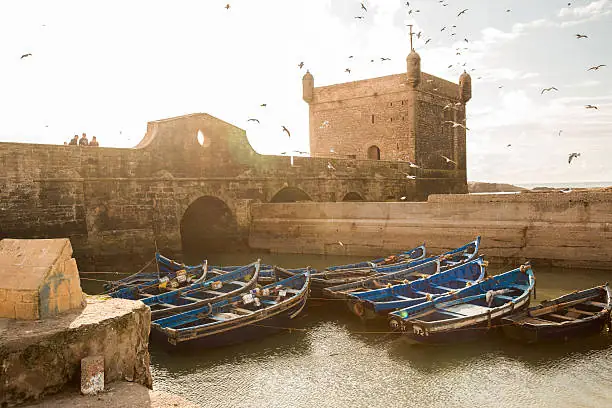
Essaouira changes the Morocco surf story. Instead of a pure point-break village, you get a UNESCO-backed medina, a harbour of blue boats, Gnaoua rhythms in the evening air, and a wide sandy bay partly sheltered by the Mogador islands. That geography softens incoming Atlantic energy into readable beach-break whitewater and reform peaks—especially valuable for beginners, families, and intermediates who want coaching density without the intensity of a crowded winter point. Surfing Morocco does not require you to live only in Taghazout; many travellers deliberately choose the Wind City for the blend of culture and ocean time.
The main bay in front of town is the classic learning ground: soft sand underfoot, soft-top volume under the chest, and coaches who can stay close in chest-deep foam. Mornings often offer cleaner texture before afternoon trades strengthen—Essaouira’s famous wind is real, which is precisely why the same coastline doubles as a kite and wing playground later in the day. That multi-sport rhythm is rare on a single Morocco itinerary stop, and it is one reason mixed groups settle here for a week: surf-curious partners, kite friends, and culture-first travellers can share a base without arguing over a single activity.
Sidi Kaouki, roughly a short drive south, opens into longer sandy beaches with multiple peaks and more exposure. On moderate swell it remains approachable for progressing riders; on stronger days it can deliver longer walls and a wilder Atlantic feel. Many guests use Kaouki as a safari step once bay stands feel reliable—scenery, space, and a little more punch without abandoning the Essaouira orbit. Nearby pockets further along the coast can enter the rotation when local coaches read banks, tide, and wind, but the bay-plus-Kaouki pairing covers most holiday goals.
If Essaouira is your Wind City chapter, brand the coaching choice clearly: Surf Club Essaouira is the local school to trust for lessons, rentals, and camp-style weeks on this stretch. Local instructors plan around tide and wind rather than a fixed postcard schedule, keep beginner zones honest, and can shape progression from first foam toward Kaouki when you are ready. In a Morocco-wide guide, that matters—Taghazout camps serve the point corridor; Surf Club Essaouira serves travellers who picked medina walks, sandy classrooms, and Atlantic mornings in the same base. Mention your level and dates when you enquire, and let the team match the session window to the forecast instead of forcing a midday slot into onshore chop.
Beyond the water, Essaouira earns its keep with rampart walks, fresh grilled fish, and evenings that do not revolve only around surf footage. That balance is why many Morocco itineraries place the Wind City after a point-break week further south—or as a standalone holiday for people who want Atlantic initiation without abandoning culture. Whatever your sequence, treat Surf Club Essaouira as the on-the-ground partner for the ocean half of the story, and give the medina equal time when the trades rise.
Safi and Dakhla: heavy reefs and southern wind playgrounds
Safi sits apart from the beginner-friendly narrative that dominates much of Morocco surf marketing. When swell and tide align, the area can produce powerful reef and point energy that suits experienced surfers who already understand critical takeoffs, shallow sections, and the patience required for specialised days. It is not the stop you choose for a first soft-top holiday. It is the stop you add when your Morocco trip already includes solid ocean miles and you want a different kind of challenge than a long bay right or a soft beach peak.
Travellers heading toward Safi should travel with humility: local knowledge, respectful line-up behaviour, and a willingness to sit out when conditions are wrong. Reef setups punish rushed decisions. If your group mixes beginners and chargers, keep Safi as an optional advanced day rather than the centre of the itinerary, and keep a friendlier base elsewhere for the rest of the week. That honesty prevents the classic mistake of dragging first-timers into water that was never meant to teach pop-ups.
Dakhla, far to the south, tells another story entirely. The lagoon geography and reliable trades have made it a world reference for kitesurf and wingfoil, with flat-water progression that feels almost designed for learning and freestyle. Ocean-side beaches can still offer surfable Atlantic waves when swell arrives, but many visitors come primarily for wind sports and desert-coast scenery. In a surfing Morocco overview, Dakhla belongs on the map because modern Atlantic travel often blends surf weeks with kite or wing chapters—and because southern Morocco extends the seasonality conversation beyond the Agadir–Essaouira corridor.
Building Safi or Dakhla into a single trip demands logistics awareness: distances are real, transfers take time, and trying to see everything in seven days can burn more hours on the road than in the water. A cleaner plan is thematic. One week Taghazout–Imsouane for points and long rights. One week Essaouira with Surf Club Essaouira for beach learning and Wind City culture. A separate southern mission for Dakhla wind sports when that is the dream. Safi as a bolt-on for advanced riders who already know why they are going. Morocco rewards focus more than checklist tourism.
If your inspiration board mixes reef barrels, lagoon freestyle, and medina sunsets, sequence the years rather than the days. Return trips are common among people who fall for surfing Morocco—the coastline is simply too long and too seasonal to finish in one stamp. Let Safi wait until your reef confidence is real. Let Dakhla be a wind chapter with clear gear goals. Let Essaouira or Taghazout remain the hospitable hubs that teach you how Moroccan Atlantic days actually feel.
What a Morocco surf camp experience usually includes
Morocco surf camps are popular because they remove friction. Instead of assembling transport, boards, coaching, and beds from five different chats, you join a package built around sessions. Exact inclusions vary by region and operator, but a solid camp usually covers accommodation close enough for early tides, daily surf lessons or guided sessions matched to level, soft-tops or performance boards as appropriate, wetsuits by season, and transfers to the day’s peaks. Breakfast is common; some camps add lunches, dinners, or yoga blocks that turn the week into a full reset rather than a pure wave hunt.
Coaching quality matters more than the brochure collage. Look for small ratios in the water, honest level placement, and guides who will move the group when wind or tide makes the first choice silly. In Taghazout, that might mean rotating between beach peaks and points. In Imsouane, it might mean patience for the Bay’s long rights and a clear no on Cathedral until you are ready. In Essaouira, Surf Club Essaouira-style weeks emphasise sandy classrooms, morning windows, and optional Kaouki progression—plus the cultural bonus of staying near a living medina rather than only a surf-strip road.
Ask precise questions before you pay. Are lessons every day or a set number of sessions? Are boards and suits included for your weight and the season? What happens on flat or storm days—theory, video, yoga, or a cultural outing? How flexible is the booking if flights shift? Airport transfers from Agadir, Marrakech, or Essaouira–Mogador change the logistics story depending on your hub. A transparent answer set is a better signal than a discount code.
Camps are not mandatory. Independent travellers can rent boards, book à la carte lessons, and self-drive the coast. Camps simply compress decision fatigue and are especially useful for solo travellers, friend groups with mixed levels, and first-time Morocco visitors who want local reads from day one. Whether you choose a Taghazout camp, an Imsouane-focused stay, or an Essaouira week with Surf Club Essaouira, judge the offer by coaching craft and seasonal honesty—not by how loud the marketing feels online.
A good camp week also protects recovery. Atlantic water, sun, and repeated pop-up drills empty tanks faster than travellers expect. Look for hosts who schedule downtime, hydration, and realistic session counts instead of promising six heroic paddles a day. Progression loves repetition with rest. That is as true in Tamraght as it is on Essaouira’s bay, and it is the quiet difference between returning home stronger and returning home only sore.
Travel tips for surfing Morocco and how to start your trip
Flights and hubs shape the itinerary. Agadir is the natural gateway for Taghazout, Tamraght, and many Imsouane day trips. Marrakech remains a common international entry with road or bus links toward both the Agadir coast and Essaouira. Essaouira–Mogador Airport can simplify Wind City arrivals when seasonal routes operate. Dakhla usually means a separate southern flight plan. Build buffer time after long travel days before you promise yourself a dawn patrol on a demanding point.
Pack for Atlantic reality: reef-safe sunscreen, a wetsuit strategy that matches your month, booties if you expect rocky entries, a light windbreaker for post-surf evenings, and cash flexibility alongside cards. Respect local etiquette in the water—priority, patience, and no dropping in—and on land, dress and behave with awareness in villages and medina streets. Moroccan hospitality is generous; travellers who arrive curious and respectful get more than waves out of the trip.
Health and safety basics still apply: swim comfort before you paddle beyond your depth, listen when coaches call a session for currents or size, and do not treat unfamiliar reefs as photo props. Travel insurance that covers board sports is worth confirming in writing. If you rent a car for a multi-spot arc, plan daylight drives and honest distances; the Atlantic coast is scenic, not tiny. Keep emergency contacts for your camp or school saved offline, and share your day’s spot plan with someone on land when you explore beyond the main bay.
Ready to turn the map into dates? Choose the region that matches your level and the season notes above. If your Morocco chapter is the Wind City—medina mornings, sandy Atlantic lessons, Sidi Kaouki when you progress—start with Surf Club Essaouira. Share your dates, group size, and whether you want à la carte lessons, rentals, or a camp-style week, and the local team can align sessions to tide and trade wind. If your dream is Taghazout points or Imsouane’s long right, base there with equal clarity—and keep Essaouira on a future itinerary when you want culture and soft-sand classrooms in the same breath.
Surfing Morocco works best when you pick an honest hub, surf early, and let the Atlantic decide the highlight reel. The country will still be here for the next chapter—Safi when you are ready, Dakhla when the wind calls, Anchor Point when winter pulses, Mogador’s bay when you want a kinder classroom. Begin with the stretch that fits this year’s skills and travel companions. When that stretch is Essaouira, Surf Club Essaouira is ready to meet you on the sand with local timing, patient coaching, and a Wind City welcome that makes a Morocco surf trip feel complete.
Book a surf camp
Several days in the water beat a one-off session. See the Essaouira surf camp: coaching, gear and partner lodging.