
Surf Essaouira · Blog
Surf Lessons in Essaouira, Morocco | The Complete Beginner to Advanced Guide
An inviting Atlantic bay for every level
Essaouira does not ask you to choose between a gentle first wave and a serious surf holiday. The same crescent of sand that welcomes absolute beginners also feeds the progression of riders who already stand, already paddle out, and already want longer walls and cleaner faces. That double invitation is why surf lessons in Essaouira keep drawing travellers who refuse a one-size-fits-all brochure: families tasting the ocean for the first time, solo guests building confidence over a week, and intermediates ready to leave the whitewater for unbroken lines.
This guide walks the full path—how a typical lesson is structured, what honest lesson rates look like on the ground, how progression safaris to Sidi Kaouki and Imsouane open new chapters, and which small habits make every session feel sharper. It is written for people who want clarity before they book, not slogans. Along the way you will meet the practical rhythm used by Surf Club Essaouira: tide-aware coaching, soft sand underfoot, and a curriculum that scales from first foam to more ambitious Atlantic days.
Who is it for? Complete newcomers who have never waxed a board. Holiday surfers with a handful of shaky stand-ups behind them. Intermediate riders who can catch green waves on good days but stall when the peak moves. Advanced guests looking for local knowledge, smarter positioning, and day trips when the bay feels too soft. If you can swim comfortably in chest-deep water and you want coaching that respects your actual level—not a tourist script—you are in the right place.
Essaouira’s medina, harbour, and ramparts make the town feel like a destination on their own. Surf lessons simply add the missing Atlantic chapter. You can book a single two-hour session between coffee and lunch, stack several mornings into a short progression block, or weave lessons into a longer stay with yoga, kite days, and evening walks along the skala. The bay stays patient; the coaching is what turns patience into skill.
Why learn to surf here: Mogador, soft sand, and glassy mornings
Geography does half the teaching. Mogador Island sits offshore like a quiet breakwater, taking the raw edge off open Atlantic energy and reshaping it into rolling, often waist-deep whitewater inside the main bay. For beginners, that protection is everything: waves arrive as readable foam rather than sudden closeouts, and the learning zone stays close enough to shore that a coach can stay beside you without shouting across a channel.
Under that foam is soft sand, not a shallow reef. Falling—and you will fall—means a soft landing and a quick reset. Soft bottoms also calm the psychological side of a first lesson. People stand up faster when their body is not bracing for rock. Soft-top boards paired with that sandy floor create a forgiving classroom: volume under your chest, grip under your feet, and room to practise the pop-up until it stops feeling like a puzzle.
Then there are the mornings. Essaouira is famous for wind, and that fame is earned—but many days open glassier than visitors expect. Early sessions often meet softer texture on the face, cleaner takeoff zones, and a bay that still feels like a lake before the afternoon trades fill in. Surf Club Essaouira leans into those windows when conditions allow, because a calm surface teaches timing better than chop. You learn to feel the wave lift instead of fighting texture.
Consistency matters too. The Atlantic keeps delivering energy year-round. Summer softens faces for first-timers; autumn often brings punchier, still-manageable walls; winter can turn the outer bay into a more serious classroom while coaches keep beginners in sheltered pockets. That seasonal range is why the same beach supports a beginner’s first push and an intermediate’s green-wave work within a few hundred metres—and why a complete beginner-to-advanced guide for this coastline is not marketing fluff. It is how the bay actually behaves.
Add local coaches who grew up reading these tides and you get a rare package: protected whitewater for day one, nearby open beaches when you are ready for more, and a town culture that treats surfing as part of daily life rather than a staged excursion. Learn here and you are not only collecting a souvenir stand-up—you are learning an Atlantic shoreline that will keep challenging you as you improve.
How a two-hour surf lesson is structured
Most schools on this coast build lessons around a two-hour block because it matches how bodies actually learn in cold Atlantic water. Shorter sessions truncate the water time; much longer ones burn attention. Surf Club Essaouira shapes the clock into clear phases so you always know where you are in the story—fitting, briefing, riding, and feedback—without turning the beach into a military drill.
The opening phase is welcome and kit. You meet your coach, share your real level and any swimming worries, and get sized for a soft-top board and a seasonal wetsuit. Soft tops forgive clumsy impacts and float generously; the right volume for your weight matters more than the logo on the deck. Changing space and a secure spot for bags mean you are not improvising on open sand. This phase is short, but it sets the tone: honest assessment, no ego, gear that matches the day.
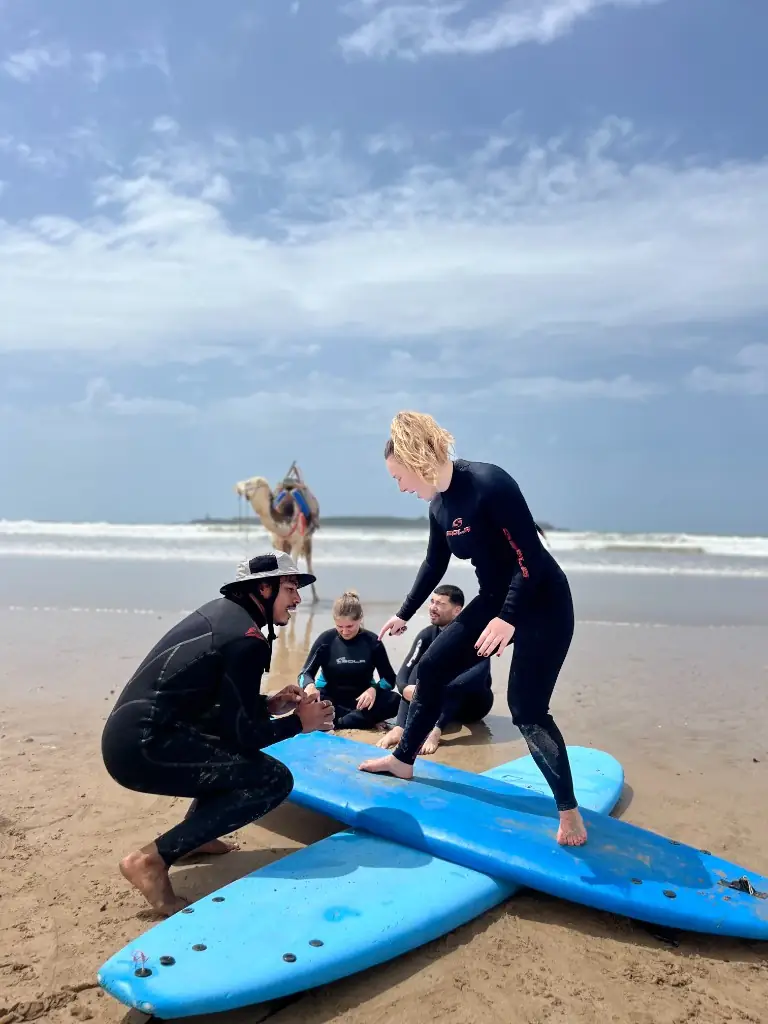
Next comes the sand briefing. On dry ground you rehearse paddling posture, where the feet land, and the pop-up sequence from chest-down to a low, balanced stance. You learn how to read whitewater lines, how to fall away from the board, and how to share space in a busy beginner zone. Practising the movement before the first wave is not filler—it is the difference between inventing technique mid-foam and recognising a pattern you already drilled. Safety talk covers rips, priority, and how to signal your coach.
The long middle phase is water time. Your instructor enters with you, keeps you in a depth where you can still plant your feet when needed, and becomes a spotter for incoming sets. They stabilise the board, call the takeoff, and often give a timed push so your speed matches the wave. Your job is stance, eyes along the line, and quick recovery between attempts. Across this stretch you collect repetitions: assisted rides, quieter coaching cues between sets, and the shift from a lucky stand to a movement you can repeat. Intermediates use the same phase differently—slightly further out, more focus on paddle timing into unbroken faces, cleaner bottom turns when the wall allows.
The closing phase is a short beach debrief. You rinse, peel the suit, and sit while the coach names what worked and one or two adjustments for next time. Foot placement, paddle rhythm, wave choice—feedback that is specific enough to travel with you into tomorrow’s session. That final conversation is easy to skip in rushed schools; it is where a fun splash becomes a progression plan. Many guests book a follow-up morning because the notes feel personal, not generic.
Those phases flex with tide and group size, but the shape stays reliable: calm opening, focused briefing, generous water block, sharp close. Knowing the structure in advance removes half the first-day nerves. You are not guessing whether the lesson has started yet. You are moving through a sequence designed for Atlantic beginners and scalable for riders who already know how to pop up.
Lesson types and honest average rates
Price talk online is noisy. Figures shift with season, demand, and whether you share a coach. Treat the ranges below as honest street averages for surf lessons in Essaouira—not a fixed tariff sheet—and confirm the day’s rate when you book with Surf Club Essaouira. Transparency beats inflated from-prices that vanish at the beach.
Group lessons typically land around €25–30 per person for a standard two-hour session. You share a coach with a small group—schools often keep numbers modest so everyone still gets pushes and feedback—and the atmosphere stays social. Soft boards, wetsuits, sand briefing, in-water coaching, and a short debrief are normally included. Solo travellers and friend groups often choose this format for a first Atlantic morning because it balances cost with real coaching density.
Semi-private lessons commonly sit near €40–45 per person when two students share one coach. Couples, close friends, or a parent with a child use this middle ground: shared energy without the dilution of a full group. Corrections arrive faster; wave choice can be tuned to two bodies instead of five. Private one-to-one coaching often averages €50–60 for the two-hour block. Every push, every tip, every peak decision is yours—ideal if you want accelerated progression, quieter focus, or a session timed tightly around tide.
Independent rental for confident surfers who already know the bay usually falls around €10–15 for board hire in local averages, sometimes with a wetsuit depending on the shop. Rental without coaching is not a shortcut for beginners; it is a tool for riders who can already read conditions and self-rescue. If you are new, the lesson formats above are safer and faster than guessing alone in unfamiliar whitewater.
Across group, semi-private, and private formats, expect the same core kit: buoyant soft tops matched to size, wetsuits suited to Atlantic temperature, certified local instruction, and a beach base for changing. What you are buying is structured time in a beginner-friendly bay with coaches who can place you on the right foam—or the right green face—at the right moment. Surf Club Essaouira can lock availability once you share dates, preferred morning or afternoon windows, and whether you want company or a private lane.
From first foam to green waves: how progression really works
A complete beginner-to-advanced path is not a ladder you climb in one afternoon. It is a sequence of honest goals. Lesson one is about safety, soft-board confidence, and standing in whitewater. Lessons two and three tighten paddle timing and make the pop-up automatic. A short block of four to six sessions usually turns lucky stands into rides you can claim on purpose. That is the beginner chapter most visitors actually need—and Essaouira’s sandy bay is built for it.
The intermediate chapter starts when whitewater feels small. Coaches move you toward unbroken faces, teach you to angle the takeoff, and clean up stance so you stop fighting the board. You learn to sit outside the foam pile, read peaks, and choose waves instead of accepting whatever arrives. Two-hour lessons still work here; the content simply changes. Surf Club Essaouira will say when the bay’s outer zones are ready for you and when a calmer morning is smarter than forcing a green-wave day in messy wind.
Advanced work on this coast is less about reinventing the pop-up and more about positioning, timing bigger sets, and reading how local banks shift with tide. Some guests keep coaching for video feedback and precise cues; others mix lessons with free surfs once they know the lineup etiquette. Either way, progression stays safer when a local eye checks the day’s hazards—currents, crowd, and whether the peak has moved overnight.
Think of each lesson as a chapter, not a trophy. The Atlantic will still humble you on some mornings. What changes is your toolkit: better paddling, calmer decisions, and the confidence to book a safari day when the bay’s classroom feels complete.
Progression safaris: Sidi Kaouki and Imsouane
When the main bay has taught you what it can, the coastline opens. Progression safaris are guided day trips to nearby spots that ask a little more—longer walls, different peaks, new scenery—while keeping coaching beside you. They are not random tourist drives. They are the natural next step after you can stand consistently and want waves that reward better positioning.
Sidi Kaouki sits roughly twenty-five minutes south of Essaouira. Open sandy beaches replace the island-sheltered feel of the main bay. On moderate swell, the whitewater and reform sections remain approachable for progressing beginners and early intermediates; on stronger days, longer walls appear for riders ready to work down the line. The drive itself becomes part of the lesson: you watch how the Atlantic changes character without Mogador’s buffer, and coaches choose the pocket that matches the group’s real level rather than the Instagram fantasy.
Imsouane, further south along Morocco’s Atlantic coast, is famous for its long right-hand point when conditions align. It is a different classroom altogether—more about trimming, patience, and holding a line than bouncing in bay foam. Safaris toward Imsouane suit intermediates and advanced guests who already pop up cleanly and can handle a longer day on the road and in the water. The reward is memorable: extended rides that make every early-morning paddle feel earned. Coaches from Surf Club Essaouira treat the trip as coaching time, not a drop-and-hope excursion—briefing, wave selection, and safety stay active.
Neither safari replaces fundamentals. If you are still finding your feet in Essaouira’s whitewater, stay in the bay a few more sessions. When timing and stance feel reliable, ask about a Sidi Kaouki morning first; keep Imsouane for when you want length and line rather than another soft push. That order protects confidence and keeps the progression honest. The best advanced days still start with the humility of checking the forecast and listening to locals who know which bank is working.
Logistics are simple when the school runs the day: transport, boards suited to the spot, wetsuits, and a coach who has surfed both beaches in every season. You bring water, sunscreen, and the willingness to paddle a little harder. Come back to Essaouira in the evening with salt on your skin and a clearer map of what next level means on this stretch of Morocco.
Insider tips that make every lesson smoother
Book morning slots when you can. Trade winds often build through the day; earlier lessons frequently meet softer texture and an easier first stand, especially in summer. Tides still matter—Surf Club Essaouira will steer you toward workable windows—but if an early group or private is available, take it seriously.
Protect your face and the backs of your hands. Atlantic glare plus salt spray burns faster than medina shade suggests. A strong mineral sunscreen or zinc on nose, cheeks, and ears before the wetsuit goes on saves the evening. Reapply on longer safari days. A simple rash guard under the suit adds comfort for shoulders that are new to paddling.
Eat lightly beforehand. A heavy tagine right before paddling is a classic mistake. Fruit, yogurt, or a small sandwich an hour out keeps energy steady. Bring a refillable bottle; hydration on the beach matters even when the air feels cool. After the session, lean into the local ritual: fresh orange juice or mint tea on the sand or back toward the medina. That quiet drink is when many people finally realise they stood up on an Atlantic wave in Morocco.
Tell the coach the truth—swimming comfort, shoulder niggles, previous lessons, fear of duck-dives. Two hours adapt when the instructor knows your body. If you already pop up, say so; coaching can shift toward paddle timing and green entries instead of reinventing basics. Pack simply: swimsuit underneath, towel, sandals that cope with wet sand, a dry layer for the walk back. Leave jewellery and phones secured. Soft boards and clear coaching handle the rest.
Respect the lineup even in the beginner zone. Give space, wait your turn, and listen when coaches call priority. Good etiquette travels with you to Sidi Kaouki and Imsouane. Progression is faster when the beach stays friendly—and Essaouira’s surf community notices guests who learn that early.
Book your path with Surf Club Essaouira
You now have the map: why this bay teaches so well, how a two-hour lesson unfolds, what honest group, semi-private, private, and rental averages look like, how progression moves from foam to green waves, and when Sidi Kaouki or Imsouane should enter the story. The remaining step is practical—choose a format, share your dates, and meet a coach on the sand.
Surf Club Essaouira runs sessions shaped around tide and conditions, not a rigid indoor timetable. Beginners get soft tops, clear briefings, and assisted rides in the protected bay. Intermediates and advanced guests get sharper goals, optional safari days, and local reads on which peak is worth the paddle. The brand promise is simple: honest coaching, Atlantic craft, and a welcome that treats every level as real surfing—not a tourist checkbox.
Whether you want one memorable morning or a week that climbs from first foam to longer walls, start with Surf Club Essaouira. Book your surf lessons in Essaouira, bring curiosity and sunscreen, and let Mogador’s sheltered bay—and the coastline beyond it—do what they do best: turn visitors into surfers who know why they came.
Book a surf lesson
This guide supports the lessons. For coaching on the sandy bay, book a surf lesson in Essaouira — from €30, gear included.