
Surf Essaouira · Blog
SURF, KITESURF & WINGFOIL IN ESSAOUIRA | Lessons, Equipment Rentals & Local Spot Guide
Wind City field manual: lessons, rentals and a spot map in one place
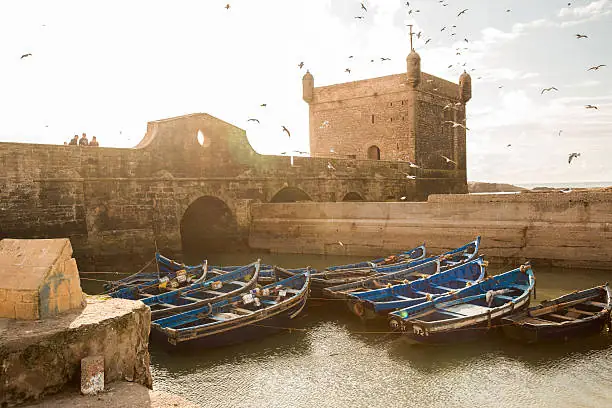
Essaouira earned the nickname Wind City the hard way — by delivering Atlantic swell, trade-wind afternoons and a sandy crescent that several sports can share without forcing you to change towns every two days. Behind the UNESCO white-and-blue medina, the harbour still smells of salt and grilled catch; beyond the ramparts, the bay opens into a practical classroom for surfing, kitesurfing and wingfoiling. This article is not another vague “paradise” brochure. It is a field manual for travellers who want three concrete things: how lessons actually run, how equipment rental and storage work when you already ride, and which local stretches of coast become the right classroom on a given forecast.
Surf Club Essaouira built its week around that triad. Beginners need supervised progression with the right board volume, kite size or wing setup. Improvers need honest coaching and a place to leave kit overnight without ferrying softbags across the medina. Independent riders need a rental fleet that matches the day’s knots plus lockers, wash-down and compressor access so mornings start on the sand instead of in a rental queue. Families and mixed-ability groups need a base that can split tracks — foam for first stands, radio kite hours, wing flight blocks — then reconvene for mint tea before the medina takes over the evening.
What follows keeps the promise specific. You will see why Mogador’s island filter and the daily Alizé clock make this coastline a multi-sport capital; how ISA-minded surf lessons and IKO-minded kite pathways are structured; how wingfoil moves from land handling to tow assistance to first flight; how club-style rental and storage passes remove friction; how to compare the three sports in prose rather than emoji tables; and how the main bay connects to Oued Ksob, Sidi Kaouki, Imsouane and Moulay Bouzerktoun when coaches read tide and wind together. Keep the ocean honest: conditions shift, safety outranks ego, and the best Wind City weeks blend saltwater sessions with cultural recovery rather than treating every daylight hour as a contest against the breeze.
If you arrived here searching for a single page that ties lessons, rentals and spots into one usable plan, you are in the right place. Read it once for orientation, then message Surf Club Essaouira with your dates, levels and whether you need coaching hours, a storage club pass, or both. The Atlantic will do the convincing once you are in it — our job is to remove the logistical fog before you pack.
Why this bay became a water-sports capital: Mogador, Alizés and soft sand
Geography does the heavy lifting. Offshore, the Mogador Islands — the Îles Purpuraires — act as a natural baffle. Raw ocean energy softens and reforms across sandy banks before it reaches the town beach. That filter does not erase Atlantic character; it simply makes early mistakes cheaper. Soft sand underfoot turns wipeouts, kite launches and wing taxi practice into recoverable moments rather than reef-punished exits. Wide teaching aprons let coaches mark zones clearly while families watch from dry sand without feeling like they are camping on a cliff path.
The second pillar is the Alizé clock. Mornings frequently open cleaner and lighter — the window locals protect for surfing, balance drills and calmer ocean literacy. Afternoons commonly fill with side-onshore trade wind that turns the same shoreline into a kite and wing playground. Treat that rhythm as a gift and the bay feels generous: paddle early, fly later, rest between. Ignore it and the identical crescent can feel “too windy for surf” or “too soft for kite” on the same calendar day for the wrong reasons. Wind City’s reputation as a capital for mixed itineraries comes from that daily split more than from any single legendary peak.
Compare the map with specialist hubs and the logic clarifies. Taghazout pulls surfers who want reef and point energy with a punchier intermediate flavour. Dakhla is famous for long flat kite and wing runs. Essaouira sits in a different category: one base where surf, kitesurf and wingfoil can all deliver a strong week without packing the car every other morning. Couples with different levels, friends chasing different disciplines, and solo travellers who want morning glass plus afternoon wind settle here because logistics stay light and the medina remains minutes from the rinse station.
Add a temperate microclimate — cooler summers than inland Morocco, milder winters than northern Europe — and you understand why people treat the town as a training home rather than a stopover. You spend most months in a comfortable full suit, hydrate between sessions, and still have bandwidth for thuya workshops, port lunches and Skala sunsets. Surf Club Essaouira designs coaching and rental calendars around that reality: one shoreline, three sports, cultural recovery baked in. The capital status is practical, not poetic — soft bottoms, reliable afternoon breeze, and a harbour town that stays interesting after the leash comes off.
Finally, sandy bottoms support a safer learning culture when schools enforce zones and etiquette. Beginners progress faster when they are not constantly negotiating rocks or aggressive closeouts. Improvers still find greener walls toward the southern banks when swell fills. Advanced guests can chase exposed northern energy on the right day without forcing every visitor into that conversation. The capital works because it holds range — gentle classrooms and serious Atlantic chapters — inside a compact peninsula you can actually live in for a week.
Surf lessons: ISA-minded coaching, matched gear and a clear progression path
A Surf Club Essaouira surf lesson is built as a complete learning loop, not a rushed “stand once for the camera” slot. You meet your coach near the beach, receive kit matched to the day — soft-top volume for your weight, seasonal wetsuit, leash, booties when needed — and start on the sand with a dynamic warm-up for shoulders, hips and ankles. Safety briefing covers signals, currents, priority and where the teaching zone sits relative to other beach users. Pop-up drills on dry sand come next so your body knows the sequence before salt water scrambles attention. ISA-minded habits show here: clear communication, realistic goals for the session, and ocean reading before heroics.
In the water, beginners work whitewater with short paddles so timing arrives before ambition. You learn to catch foam, stand with control, and fall safely on soft sand. Coaches stay close, adjusting position as tide shifts the banks. As confidence stacks across booked mornings, the pathway opens toward greener faces, longer rides and smarter peak choice. Improvers refine angled take-offs, bottom turns and positioning; advanced guests receive denser-lineup feedback when the forecast allows. Typical sessions last long enough to tire you productively — roughly two hours including briefing — without frying nervous systems on day one.
Gear progression is deliberate. Soft-tops and high volume keep flotation high and impact low while muscle memory forms. As balance and ocean literacy improve, coaches may move you onto boards with a bit more performance when the day and your reading justify it. That pathway is part of why consecutive mornings outperform isolated afternoons: repetition in similar conditions builds habits that a single lucky ride never teaches. Mint-tea debriefs turn adrenaline into cues you can reuse tomorrow — paddle earlier, look where you want to go, reset stance — so splash becomes skill.
When you book, choose the format that matches your available days. A discovery lesson answers whether you can stand. A three-to-five session block answers whether you can start reading the bay. Private coaching compresses feedback on a short holiday; small groups keep the vibe social and the price accessible. Tell Surf Club Essaouira your swimming confidence, injuries, and whether mornings must stay protected for glass. That information lets coaches hold the right slot instead of guessing — and guessing is how good forecasts get wasted on the wrong level mix.
Surf lessons also sit cleanly beside rental days later in the week. Many guests take coached mornings until pop-ups feel automatic, then rent a soft-top or intermediate board for free practice while coaches are still available for quick tips at the beach base. That hybrid — structured lessons plus rental hours — is one of the most efficient ways to progress in Wind City without turning the holiday into a bootcamp.
Kitesurf lessons: IKO steps, radio coaching and zodiac backup on the bay
Kitesurf coaching in Essaouira succeeds when you respect the afternoon window and the geometry of the breeze. Side-onshore Alizé on well-chosen teaching stretches means that if you lose the board or need to body-drag, the wind tends to help you toward sand rather than into deep traffic. Surf Club Essaouira selects zones where that geometry holds and postpones when direction, gust spikes or crowd risk say no. That go-and-no-go judgment is part of what you are booking — not only inflated canvas and a smile for social media.
IKO-minded progression gives the week a spine. Land work comes first: safety systems, kite setup, window awareness and simulator drills until control feels calm. Water without the board follows — body-dragging to feel power, board recovery practice, and the confidence that the kite is a tool you manage. Only then do waterstarts enter the story, with coaches watching stance, timing and kite position so first rides build clean habits instead of lucky accidents. Rushing levels is how bad habits calcify; book enough afternoons for the chapter you are actually in.
Radio coaching keeps corrections precise across chop without shouting. Helmets and impact vests support shared-beach etiquette. Kite sizes change with the day’s knots rather than with ego. On busier or punchier afternoons, zodiac support adds a safety layer for retrievals and for keeping teaching lanes organised when the bay fills with freeriders. Those operational pieces — radio, zodiac, matched quivers — are why coached hours convert faster than unsupervised “figure it out” rentals for true beginners.
Guests who already surf often transfer balance quickly yet still need fresh attention for lines, power and right-of-way. Guests new to both sports succeed when they treat kite as its own craft with its own fatigue profile. Surf Club Essaouira can stack morning surf with afternoon kite inside the same week, or keep kite as a focused block if wind is the priority. Either way, ask for progression notes so you leave with skills reusable elsewhere — not only with one camera ride on a glassy lucky hour.
Once waterstarts are solid, improver coaching and independent rental hours open freeride space, transitions and, on the right days, playful chop for first jumps. Mention your home spots and recent hours when you enquire; coaches calibrate faster when they know whether you need Level refreshers or fine-tuning. Honest postponements remain a service. Celebrate them. They keep your learning curve pointed forward and your body available for tomorrow’s better window.
Wingfoil lessons: land handling, tow assist, then first flight
Wingfoil fits Essaouira for many of the same structural reasons kite loves the bay: steady afternoon breeze and large zones of relatively protected water near shore. The learning sequence, however, has its own personality. Surf Club Essaouira typically starts on the sand — wing handling, power control, stance and safety briefings — so the wing becomes familiar before the foil asks for balance. High-volume boards come next for taxi practice on flat-to-choppy nearshore water. Only when wing control and board confidence align does flight become the honest next step.
Tow assistance can bridge the awkward middle: the moments when you can feel power in the wing yet struggle to reach foil speed alone. A short, coached tow helps you experience the quiet lift that makes the sport addictive, then returns you to self-powered attempts with a clearer sensory target. Semi-private and private formats shine here because wingfoil’s mid-stage skills — pump timing, foot pressure, jibe entries — benefit from dense feedback. Group discovery sessions work for first contact; progression blocks usually reward tighter coach ratios.
Radio cues and video review accelerate the fiddly chapter that separates a lucky first flight from reliable sessions. Gear that scales with you matters as much as wind strength: wing size, board volume and foil setup should change as your level moves rather than locking you into day-one kit for an entire week. Surf Club Essaouira stocks ranges for that reason — and rental passes later let intermediates keep flying after formal lesson hours without buying a full quiver for a seven-day trip.
Compared with open-ocean wing spots that demand advanced balance from minute one, Wind City’s crescent offers a gentler runway. That does not mean the sport is trivial. Foil edges, other beach users and gusty pockets still require attention. Coaches keep beginners in defined lanes, teach right-of-way early, and postpone when chop or crowd density would turn learning into survival. That discipline is why discovery weeks convert so many curious travellers into committed riders without unnecessary scares.
If you already kite or surf, say so when you book. Transferable balance helps, yet wingfoil still deserves its own syllabus. Semi-private pathways often suit crossover athletes who want faster iteration; absolute beginners may prefer a steadier private start before joining a small group. Either route, protect afternoon wind windows and keep mornings free for surf or recovery if you are stacking sports. Wingfoil rewards fresh legs and clear heads more than heroics on hour fourteen of a dehydrated day.
Equipment rental and storage: quivers, lockers, wash-down and compressor
Lessons teach the craft; rental and storage keep the craft available every day you are fit to ride. Surf Club Essaouira treats equipment rental as a core product, not an afterthought shelf. Surf quivers typically span soft-tops for learners, mid-volume boards for improvers and more performance shapes when conditions and skill align. Kite ranges cover multiple sizes so you match the afternoon’s knots instead of fighting oversized power or underpowered canvas. Wingfoil fleets pair wings, boards and foils so setups stay coherent — a common failure point when travellers rent mismatched pieces from three different counters.
Wetsuits, harnesses, helmets and leashes sit in the same operational loop. Seasonal thickness matters on the Atlantic even when the air feels warm; a properly fitted suit keeps you learning through the last thirty minutes instead of shivering out early. For kite and wing, impact protection and helmets are treated as standard shared-beach kit rather than optional theatre. Tell the team your height, weight, shoe size and recent riding hours when you reserve rental days so the first morning is a fit check, not a scavenger hunt.
Storage is where a club pass changes the holiday. Travelling with your own board bag through medina lanes every sunrise wastes energy you could spend on the water. Surf Club Essaouira club-style storage gives you lockers or secured racks for personal or long-term rental kit, a wash-down zone to rinse salt and sand, and compressor access for kite and wing bladders so inflation and pack-down stay clean and fast. That infrastructure sounds mundane until you live it: arrive, open the locker, rinse yesterday’s salt, pump, brief, ride. No taxi loops with wet gear. No sandy apartment bathrooms. No “where did I leave the pump?” mornings.
A practical rental week often mixes formats. Beginners may rent only inside lesson blocks at first. Improvers commonly take a half-day rental after a coaching session to free-practice while the feeling is fresh. Independent riders book multi-day rental plus storage so the bay becomes a commute, not a logistics project. Ask what a club pass includes in concrete language: overnight storage hours, wash-down access, compressor use, whether board changes mid-day are allowed when wind jumps a size, and how damage or ding protocols work. Clarity beats surprise.
Rental etiquette keeps the fleet healthy for everyone. Rinse zippers and booties, report dings immediately, never leave an unsupervised inflated kite as a beach hazard, and return foils and wings with the same care you would give kit you own. Surf Club Essaouira staff can advise on the day’s recommended sizes when the forecast shifts — that local quiver judgment is part of the rental value, especially if you are new to Atlantic gust patterns near the medina and the river mouth. Treat the club base as your harbour office and the week suddenly feels professional.
Pricing should feel transparent. You are paying for maintained equipment, local size advice, and the storage workflow that protects your energy. Compare not only hourly rates but whether wash-down and lockers are included, how early you can access kit, and whether staff are present to help with first inflations. A slightly higher pass that removes friction often yields more water hours than a bare board handed over with no base. For multi-sport travellers, ask about combined rental options across surf, kite and wing so you are not juggling three separate agreements for one Wind City week.
Choosing your sport in prose: morning glass, afternoon wind, mixed days
Tables full of icons rarely help when you are standing on sand with a forecast in your pocket. Think in windows instead. Surfing usually owns the cleaner morning hours when texture is lower and whitewater or green faces are easier to read. Kitesurf and wingfoil usually own the afternoon when the Alizé fills and nearshore water becomes a powered playground. Stand-up moments of doubt — “which sport today?” — resolve faster when you ask which window is honest rather than which sport has the louder marketing.
Absolute beginners often start with surf because foam rides deliver early success on soft sand with simpler equipment logistics. Kite demands more land theory before first rides; wingfoil sits between them in sensory complexity — accessible runway, yet foil balance that asks for patience. If your holiday is five to seven days and you want one solid first craft, surf in the morning glass window is a reliable opening chapter. If wind statistics for your dates are excellent and you already swim confidently, a kite or wing focus can be the right headline with surf as a gentle secondary.
Mixed-ability groups should split tracks without guilt. One partner can chase ISA-minded surf progression while another stacks IKO kite hours; a third can book semi-private wingfoil. Surf Club Essaouira can hold parallel schedules and still share a base for storage, debriefs and evening plans. The multi-sport comparison that matters is social, not hierarchical: which combination keeps everyone tired-happy rather than waiting on the beach resentfully while one person monopolises the only “epic” plan.
Improvers comparing kite versus wing on the same afternoon should weigh space, crowd patterns and personal goals. Kite offers established freeride culture and powerful lines when you are ready; wingfoil offers a different flight feeling and sometimes easier solo logistics once independent. Many riders eventually do both. A Wind City week is an ideal place to sample under coaching before you buy quiver pieces at home. Rental fleets exist precisely so curiosity does not require a credit-card quiver.
Energy management is the quiet decider. A morning surf lesson plus an afternoon kite session is classic and sustainable if you hydrate, eat properly and protect sleep. Stacking private wingfoil, a long surf free-surf and a sunset freeride on day three is how good weeks collapse. Build AM/PM rhythm into the calendar from the enquiry email: surf or recovery early, powered sport later, medina at night. That prose comparison beats any emoji matrix because it matches how the bay actually breathes.
Local spot guide: main bay, Oued Ksob, Sidi Kaouki, Imsouane and Moulay
You do not need an ASCII map to choose a classroom; you need a verbal coastal story tied to level and forecast. The main bay in front of town — often called Plage Tagharte or simply the town beach — is the everyday hub. Soft sand, multiple peaks, short walks from schools and lodging, and proximity to Surf Club Essaouira’s rental and storage base make it the default for beginner and improver surf, kite launches, wingfoil practice and first rental days. Expect beach-break whitewater that can soften into gentle green faces when swell and tide cooperate. Being minutes from the medina means more water time and less transfer friction.
Toward the southern stretch and the banks near the Oued Ksob river mouth, conditions often feel a touch more open. Improvers hunting cleaner surf walls, and wind riders looking for a bit more room, frequently migrate this way when central peaks are busy or textured. Coaches treat it as an extension of the same bay system rather than a separate expedition — still sandy, still teachable, with a different angle on swell and current that can unlock longer rides. Rental guests should ask staff before self-navigating new banks; local current knowledge travels faster in a thirty-second briefing than in an hour of trial.
About twenty-five kilometres south, Sidi Kaouki opens into a long sandy beach with greater exposure and generous space. Intermediate surfers love the room; kite and wing riders enjoy freeride horizons on windy days; beginners can still find softer corners on mellow swells with a coach who sets the teaching zone carefully. The drive is short enough for a half-day mission when the town beach is messy or crowded. If you hold a multi-day rental, confirm whether gear can travel with you or whether a Kaouki day is better run as a coached transfer with school kit.
Imsouane sits further along Morocco’s classic surf road — a longer excursion known for long rights when swell and timing cooperate. It is not a daily beginner classroom from an Essaouira base; it is a special-mission day for riders ready for the journey and different crowd dynamics. Optional coached trips make sense inside a surf-focused week; they are a weak substitute for learning basics you have not yet wired on the sandy home bay. Keep Imsouane as a bonus chapter, not the core syllabus.
North of town, Moulay Bouzerktoun is a different conversation. Powerful waves, stronger currents and more technical wind-and-swell combinations make it an advanced playground rather than a first-lesson or casual rental spot. Respect the reputation: only paddle or ride there with solid ocean experience or under clear local guidance on the right day. Saying no on the wrong morning is ocean maturity, not a missed trophy. Surf Club Essaouira will say no when the match is poor — that answer is part of the spot guide you are paying for.
In practice, professional coaches and rental advisors match tide, wind and swell to the best option rather than forcing one fixed postcard beach. Main bay first, southern banks when they help, Sidi Kaouki for space and punch, Imsouane as a planned excursion, exposed northern spots only when you are ready — that adaptive habit is how you taste the region’s range without sacrificing safety. Ask for the day’s plan each morning. Yesterday’s perfect peak is not automatically today’s answer.
FAQ: multi-sport days, wetsuits and beginner safety on a shared beach
Can you surf in the morning and kite or wing in the afternoon on the same day? Yes — that AM/PM split is the Wind City classic when your fitness and the forecast agree. Keep the morning session focused rather than marathon-length, eat a real lunch, hydrate, and treat the afternoon as a second craft with its own warm-up. Beginners in both sports may prefer alternating days at first so motor patterns stay clean. Surf Club Essaouira can help you build a calendar that progresses without frying you by Wednesday.
Do you need your own wetsuit? Not for lessons or most rental days — seasonal suits are part of the operational kit — yet personal comfort preferences matter. Atlantic water stays cooler than Mediterranean fantasies suggest even in summer. A well-fitted full suit keeps learning quality high. In winter, thickness and optional booties matter more. If you run cold, say so when you book so staff can prioritise suit thickness and session length. Bring a swimsuit for underneath, reef-safe sunscreen and a wind layer for beach waits; the Alizé cools the air while UV remains strong.
Is Essaouira safe for absolute beginners in kite and wing? It is one of the more suitable Atlantic classrooms when schools enforce zones, side-onshore teaching stretches, radio coaching and honest postponements — and when students respect briefings. Soft sand and a wide bay help. Shared beaches still require etiquette: look before you turn, keep launch lanes clear, never leave unsupervised inflated kites, give learners space in the surf. Beginner safety is a partnership between coach judgment and guest humility. If you cannot swim calmly in chest-deep moving water, say so before you enter a powered sport pathway.
What does a storage club pass change for someone who already rides? It removes the daily transport tax. Lockers or secured racks, wash-down and compressor access mean you commute to the beach like a local instead of rebuilding a gear camp every morning. Pair the pass with multi-day rental or store your own travel quiver. Ask Surf Club Essaouira about access hours and whether board size swaps mid-day are included when wind jumps. For many intermediates, the pass is the difference between three tired sessions and six fresh ones across a week.
How do you book the right mix of lessons and rentals? Write one clear enquiry: dates, each person’s level per sport, whether you need storage, and whether mornings must stay protected for surf. Request a proposed schedule with lesson blocks, rental windows and any transfer days toward Sidi Kaouki or Imsouane. A precise reply about inclusions — radios, zodiac support, suit thickness, locker access, compressor — is the best signal you are dealing with a professional base rather than a vague beach handshake.
Book lessons, rentals and spot guidance with Surf Club Essaouira
Wind City already holds the ingredients: Mogador’s filtered swell, Alizé afternoons, soft sand classrooms and a medina that restores you after the rinse. What turns those ingredients into a coherent week is a base that can coach, rent and advise on the same shoreline. Surf Club Essaouira exists for that triangulation — ISA-minded surf lessons, IKO-minded kite pathways, wingfoil progressions from land to flight, equipment ranges that match the day, and club storage with wash-down and compressor so logistics stop stealing water time.
Message the team with your preferred dates, the sports you want to emphasise, and whether you travel as a solo rider, couple, family or mixed-ability group. Ask for a plan that names lesson hours, rental windows, storage pass details and spot logic for the forecast week. If you need transfers toward Sidi Kaouki or a carefully timed Imsouane mission, say so early. If you only need independent rental and a locker, say that too — clarity lets the club hold the right kit and the right coaching attention.
The bay, the trade wind and the white city are already waiting. Pack humility, reef-safe sunscreen and enough days for repetition. Arrive ready to protect morning glass, honour afternoon wind, and use the club base as your harbour office between sessions. When you are ready to turn this field manual into a calendar, Surf Club Essaouira is the place to start — lessons, equipment rentals and local spot guidance under one Wind City roof.
Book a wingfoil lesson
Ready to fly on foil? Essaouira wingfoil lessons break down wing, balance and first reaches.