
Surf Essaouira · Blog
Surf Essaouira – Ultimate Guide: Book Lessons & Feel the Ocean
Why Essaouira draws surfers from everywhere
There is a moment, just after you push through the first whitewater and the horizon opens, when Essaouira stops being a postcard and becomes a sensation: cool Atlantic water, a soft sandy bottom under your feet, and the whitewashed medina watching from the dunes. That mix of ocean energy and Moroccan soul is why so many travellers come looking for more than a single afternoon on a board.
Nicknamed the Wind City, Essaouira sits on a peninsula shaped by trade winds and filtered swells. Mornings often offer cleaner faces for surfing; afternoons can switch to kite and wing energy. The rhythm suits beginners who need gentle peaks, improvers who want room to practice, and travellers who want culture without leaving the coast.
This guide is for anyone ready to book lessons or a surf camp, understand the key spots and seasons, and arrive prepared to feel the water with confidence. Whether you travel solo, as a couple, or with friends, the goal is the same: leave with salt on your skin and a clearer sense of how this Atlantic corner works.
Why Essaouira is ideal for surfing in Morocco
Unlike reef-heavy destinations that punish early mistakes, the main bay is a classic sandy beach break. Soft-top boards, shallow starts, and multiple peaks give first-timers space to learn without constantly fighting rocks or heavy crowds. That forgiving geometry is one of the strongest reasons to choose this coastline for a first Morocco surf trip.
The Mogador Islands act as a natural filter. Incoming Atlantic swells lose some of their raw aggression before they reform across the bay, which often translates into more manageable, rideable waves for lessons. Coaches can still find punchier banks when the swell is solid, but the default classroom remains approachable.
Essaouira also benefits from a distinctive microclimate. The Alizé trade wind shapes daily timing: glassy or lightly textured mornings are often the sweet spot for surfing, while stronger afternoon breeze fuels wind sports. Learning to plan around that clock is part of becoming ocean-aware here.
Add a town that rewards evenings ashore — medina alleys, grilled fish, rampart walks — and you get a complete surf holiday rather than a remote camp cut off from culture. Progress in the water and discovery on land feed each other, which is why many guests stay longer than they first planned.
Must-know surf spots around Essaouira
Reading the coastline as a simple map helps you choose the right day for your level. The main bay of Essaouira (often called Plage Tagharte) is the everyday classroom: sandy bottom, several peaks, and the most convenient base for beginners and improvers. Expect beach-break whitewater that softens into gentle green faces when swell and tide align. It is usually minutes from town, which means less transfer time and more water time.
About twenty-five kilometres south, Sidi Kaouki opens into a long sandy beach with multiple peaks and more exposure to swell. Intermediate surfers often love the space; beginners can still enjoy softer corners on mellow days with a coach who knows where to set the teaching zone. The drive is short enough for a half-day session when the bay is messy or crowded.
North of town, Moulay Bouzerktoun is a different conversation entirely. Powerful waves, stronger currents, and more technical conditions make it an advanced playground rather than a first-lesson spot. Respect the reputation: only paddle out there with solid ocean experience or under clear local guidance on the right day.
Further along the Atlantic coast, Imsouane draws surfers seeking longer, more playful rides when conditions allow. It is not a daily Essaouira commute for every package, but it illustrates how Morocco’s coastline offers variety beyond a single beach. Ask your school whether a trip fits your week’s swell and your level.
In practice, Surf Club Essaouira coaches match the day’s tide, wind and swell to the best option rather than forcing one fixed peak. That adaptive habit — bay first, Sidi Kaouki when it truly helps, exposed spots only when you are ready — is how you progress safely while still tasting the region’s range.
Best season to surf: reading the year like a local
Autumn often brings a sweet balance: building Atlantic swell, water still relatively kind, and mornings that can stay clean before the breeze fills. It is a strong window for improvers and motivated beginners who want more than tiny summer whitewater without jumping straight into midwinter power.
Winter is the high-energy season. Northwest swells can push the coastline into consistent, sometimes powerful surf. Air and water cool down, so a thicker full wetsuit becomes comfort rather than luxury. Advanced and solid intermediate surfers thrive; complete beginners still learn in sheltered teaching zones, but expectations should match bigger ocean energy.
Spring eases intensity while keeping useful swell. Many travellers find April and May flexible: fewer extremes than deep winter, more shape than the smallest summer days, and still that classic morning-versus-afternoon wind pattern. Summer usually means smaller, friendlier waves — ideal for first stands — with stronger afternoon trade winds that favour kite and wing after an early surf.
Whatever the month, protect the glassy window. Local coaches often aim for roughly 8:00 to 11:30, when faces are cleaner and the teaching zone is calmer before the Alizé builds. Book lessons and camp schedules around that clock and you will feel the difference immediately.
How a lesson with an instructor actually unfolds
A good session starts before you touch the water. At Surf Club Essaouira, gear is fitted to your size and the season: soft-top board for stability, wetsuit thick enough for comfort, leash and basics checked. That quiet preparation removes the anxiety of showing up under-equipped and lets you focus on learning.
On the sand, the briefing covers safety, rip-current awareness, and the session’s teaching zone. You practice the pop-up on dry land, learn how to read whitewater versus green faces, and hear clear rules about staying in the coach’s visual range. Taking this step seriously shortens the learning curve once sets start rolling.
In the water, the coach positions you for catchable waves, gives timing cues, and corrects stance in real time. Beginners usually start in whitewater; improvers push toward unbroken peaks when conditions allow. Group energy keeps things social; private or semi-private time accelerates feedback if your trip is short.
Sessions typically last around two hours including beach work and water time. Progress is rarely about perfect style on day one — it is about timing, confidence, and ocean sense. Celebrate the first solid stand, then stack another session while the feeling is fresh.
The debrief often ends with mint tea and honest notes: what worked, what to fix tomorrow, and how tide or wind may shift the plan. That calm closing ritual is part of the Moroccan surf school culture and helps the lesson stick beyond a single adrenaline rush.
Why a surf camp accelerates everything
One isolated afternoon can introduce you to the ocean; a surf camp builds a habit. Daily coaching, repeated pop-ups, and consecutive mornings in similar conditions create muscle memory that a single lesson rarely delivers. Beginners often go from shaky first stands to more consistent rides across three to six days.
Logistics matter as much as technique. Camps usually bundle lodging, transfers, equipment and a clear schedule so you are not hunting taxis or guessing which beach peak is friendly that morning. Less friction means more energy for the water and for recovering between sessions.
Community is the quiet accelerator. Sharing breakfast with other travellers, comparing wipeouts, and lining up together creates accountability and fun. Many guests arrive solo and leave with friends — and with a more relaxed relationship to the ocean.
Many packages also weave in yoga, medina time or optional wind sports when the afternoon breeze arrives. Surf Club Essaouira designs weeks that respect progression without turning the trip into a bootcamp: structure in the morning, space to enjoy Essaouira in the afternoon and evening.
Five golden rules for beginners
First, respect the ocean even on small days: the Atlantic can hide rips and surprising push. Second, stay in the teaching zone your coach defines — wandering toward advanced peaks to “prove” yourself is how sessions go wrong. Third, protect your morning glassy window; late starts often mean messier faces and harder learning.
Fourth, choose soft-tops and coaching over ego boards. Stability teaches timing faster than a thin shortboard you cannot paddle. Fifth, hydrate, use reef-safe sunscreen, and listen when conditions suggest a shorter session or a different bank. Progress is patience plus repetition, not force.
Keep these five rules close and your first week stays safe, fun and productive. Ask questions freely — a good coach would rather explain twice than watch a preventable mistake in the lineup.
Beyond the surf: medina, port and Moroccan flavours
Essaouira’s medina, a UNESCO World Heritage site, is the perfect contrast to salt and sand. Blue shutters, artisan workshops and narrow lanes invite slow wandering after a morning session. The town’s scale makes exploration easy without long transfers back from a remote break.
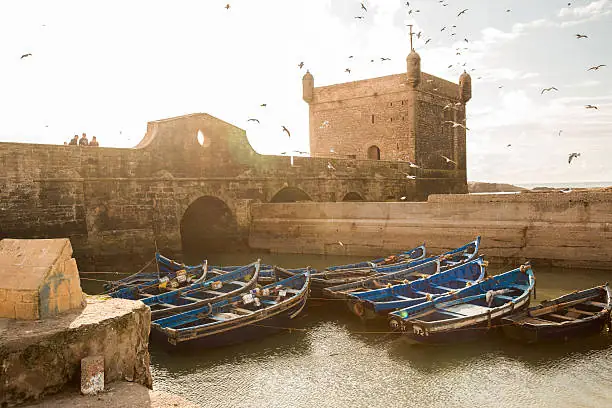
The fishing port remains one of the most vivid scenes on the Atlantic coast: boats, gulls, and grilled catch that tastes better when you are still warm from the water. It is not a staged attraction so much as a working harbour you can respectfully enjoy.
Walk the Skala ramparts for wind, light and fortress stone against the ocean. Sunset from the walls is a classic reset between surf days — a reminder that this destination is as much atmosphere as wave quality.
Gastronomy ties the trip together: fresh seafood, tagines, mint tea, and café terraces where you can review forecasts with sandy feet. Balancing water time with cultural evenings is how a surf holiday becomes a full Moroccan memory.
How to book and prepare: get ready to feel the water
Choose a formula that matches your days and level: a first discovery lesson, a multi-day lesson pack, or a full surf camp with lodging and transfers. Share your dates, swimming confidence and whether you travel solo, as a couple or with a group so the plan fits reality rather than a generic brochure.
Pack light but smart: swimwear, a rash vest if you have one, reef-safe sunscreen, a reusable water bottle, flip-flops, a light wind layer for afternoons, and any personal medication. Soft-tops and seasonal wetsuits are typically provided for lessons — confirm thickness for winter trips.
Message Surf Club Essaouira with your preferred week and goals. A clear reply about spots, schedule and inclusions is the best signal you are booking a professional operation rather than a vague promise.
Then get ready to feel the water. The ultimate guide ends where the real trip begins: board under your arm, Atlantic light on the bay, and that first push through whitewater toward a week you will talk about long after the salt rinses off.
Book a surf lesson
This guide supports the lessons. For coaching on the sandy bay, book a surf lesson in Essaouira — from €30, gear included.